How to use deep breathing exercises for stress relief sets the stage for this enthralling narrative, offering readers a glimpse into a story that is rich in detail with casual formal language style and brimming with originality from the outset.
Deep breathing is not just a simple act; it’s a powerful tool that can transform how we manage stress and enhance our overall well-being. By mastering the art of deep breathing, you can unlock a world of relaxation and inner peace that is always within reach.
Introduction to Deep Breathing Exercises for Stress Relief
Deep breathing exercises involve taking slow, deep breaths to help calm the mind and body. This technique is often used to reduce stress and promote relaxation.
When you practice deep breathing, you are activating the body’s relaxation response. This helps lower heart rate, reduce blood pressure, and decrease levels of the stress hormone cortisol. Deep breathing also increases oxygen flow to the brain, which can improve focus and concentration.
Benefits of Incorporating Deep Breathing into a Stress Relief Routine
- Reduces anxiety and promotes a sense of calm
- Improves emotional well-being and mood
- Enhances sleep quality and helps with insomnia
- Boosts immune function and overall health
- Increases mindfulness and self-awareness
Techniques for Deep Breathing
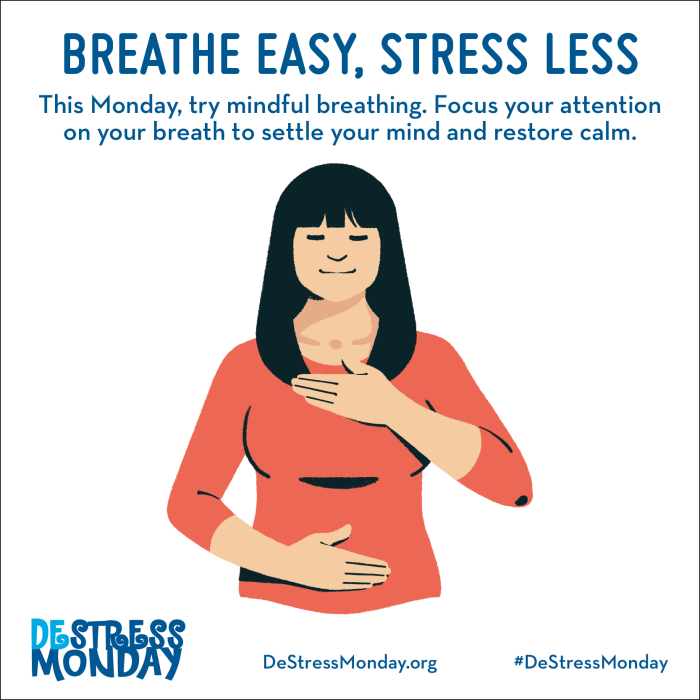
Deep breathing techniques are an effective way to reduce stress and promote relaxation. Here are some common techniques along with step-by-step instructions on how to practice them:
Diaphragmatic Breathing
Diaphragmatic breathing, also known as belly breathing, involves engaging the diaphragm to take deep breaths. This technique is great for calming the nervous system and reducing anxiety.
- Find a comfortable seated or lying position.
- Place one hand on your chest and the other on your abdomen.
- Inhale deeply through your nose, allowing your abdomen to expand as you fill your lungs with air.
- Exhale slowly through your mouth, feeling your abdomen contract.
- Repeat this process for several minutes, focusing on the rise and fall of your abdomen.
Box Breathing
Box breathing involves breathing in a pattern of equal counts for inhaling, holding the breath, exhaling, and holding the breath again. This technique can help reset the nervous system and improve focus.
- Sit or lie down in a comfortable position.
- Inhale deeply for a count of four.
- Hold your breath for a count of four.
- Exhale slowly for a count of four.
- Hold your breath again for a count of four.
- Repeat this cycle for several minutes, focusing on the rhythm of your breath.
4-7-8 Technique
The 4-7-8 technique involves breathing in for a count of four, holding the breath for a count of seven, and exhaling for a count of eight. This technique is excellent for inducing relaxation and reducing stress.
- Sit in a comfortable position with your back straight.
- Place the tip of your tongue against the ridge of tissue behind your upper front teeth.
- Inhale quietly through your nose for a count of four.
- Hold your breath for a count of seven.
- Exhale audibly through your mouth for a count of eight, making a ‘whoosh’ sound.
- Repeat this cycle for a few rounds, focusing on the calming effect of the breath.
Importance of Deep Breathing in Stress Management
Deep breathing plays a crucial role in stress management by helping to calm the mind and body, reduce tension, and promote relaxation. It is a simple yet effective technique that can be practiced anywhere, anytime to combat stress and improve overall well-being.
Connection Between Deep Breathing and Stress Management
Deep breathing exercises are known to activate the body’s relaxation response, which helps counteract the effects of stress and anxiety. By focusing on slow, deep breaths, individuals can reduce the activity of the sympathetic nervous system responsible for the “fight or flight” response, and instead activate the parasympathetic nervous system, which promotes relaxation and calmness.
Impact of Deep Breathing on Cortisol Levels and Overall Well-being, How to use deep breathing exercises for stress relief
Deep breathing has been found to lower cortisol levels, which is a hormone released in response to stress. High levels of cortisol can contribute to various health issues, including anxiety, depression, and sleep disturbances. By practicing deep breathing regularly, individuals can help reduce cortisol levels, improve mood, enhance sleep quality, and boost overall well-being.
Integrating Deep Breathing with Other Health Practices
Deep breathing exercises can be a powerful tool in promoting overall health and well-being. When combined with other health practices, such as maintaining a balanced diet, regular exercise, and mental wellness strategies, deep breathing can enhance the benefits of these practices.
Deep Breathing and Balanced Diet
Deep breathing complements a balanced diet by promoting better digestion and nutrient absorption. When we are stressed, our digestive system can be compromised, leading to issues like indigestion and bloating. Deep breathing exercises can help relax the body and mind, allowing for optimal digestion and absorption of nutrients from the food we eat.
Role of Deep Breathing in Mental Wellness and Emotional Balance
Deep breathing plays a crucial role in mental wellness and emotional balance. By practicing deep breathing, we can reduce stress levels, calm the mind, and improve focus and clarity. This can help in managing anxiety, depression, and other mental health conditions.
Deep breathing exercises can also promote emotional balance by allowing us to connect with our emotions and respond to them in a healthy way.
Tips for Incorporating Deep Breathing into a Regular Exercise Routine
- Start by incorporating deep breathing exercises at the beginning and end of your workout sessions. This can help you relax before exercising and cool down after.
- Combine deep breathing with yoga or Pilates exercises to enhance the mind-body connection and deepen the relaxation response.
- Practice deep breathing while stretching to improve flexibility and reduce muscle tension.
- Use deep breathing techniques during strength training to increase focus and improve performance.
- Experiment with different deep breathing exercises to find what works best for you and integrate them into your routine accordingly.
Enhancing Deep Breathing with Healthy Lifestyle Choices
When it comes to managing stress and improving overall well-being, incorporating deep breathing exercises into a healthy lifestyle can amplify the benefits. Let’s explore how combining deep breathing with healthy choices like hydration, quality sleep, preventive care, and chronic disease management can enhance your overall health.
Benefits of Combining Deep Breathing with Adequate Hydration
Adequate hydration is essential for overall health, including stress management. When you practice deep breathing exercises, your body requires more oxygen, and staying properly hydrated ensures optimal oxygen delivery to your cells. This combination helps in promoting relaxation, reducing stress levels, and improving mental clarity.
Relationship Between Deep Breathing and Quality Sleep
Deep breathing can have a profound impact on the quality of your sleep. By incorporating deep breathing exercises into your bedtime routine, you can calm your mind, relax your body, and reduce the racing thoughts that often hinder sleep. This practice promotes better sleep quality, allowing you to wake up feeling refreshed and rejuvenated.
How Deep Breathing Supports Preventive Care and Chronic Disease Management
Deep breathing is not only beneficial for stress relief but also plays a critical role in preventive care and chronic disease management. Consistent deep breathing exercises can help lower blood pressure, reduce inflammation, and boost the immune system. By integrating deep breathing into your daily routine, you can support your overall health and well-being, reducing the risk of developing chronic conditions and managing existing health issues more effectively.
Maximizing the Benefits of Deep Breathing
Deep breathing not only helps in stress relief but also offers a wide range of benefits for both physical and mental well-being. Let’s explore how we can maximize these benefits through different strategies.
Connection between Deep Breathing and Physical Fitness
- Deep breathing techniques can help improve lung capacity and overall respiratory function.
- Increased oxygen flow through deep breathing can enhance endurance and performance during physical activities.
- Regular practice of deep breathing can aid in relaxation, reducing muscle tension, and promoting quicker recovery after exercise.
Immune-Boosting Effects of Deep Breathing
- Deep breathing helps in reducing stress hormones like cortisol, which can suppress the immune system.
- By lowering stress levels, deep breathing can support the immune system’s ability to function optimally and defend against illnesses.
- Improved oxygenation through deep breathing can enhance the body’s ability to fight off infections and maintain overall health.
Strategies for Maintaining a Positive Mindset
- Practicing deep breathing can help in shifting focus from negative thoughts to the present moment, fostering a positive mindset.
- Incorporating affirmations or positive visualizations during deep breathing exercises can further boost mood and outlook on life.
- Deep breathing before challenging situations can help in calming nerves, promoting clarity of thought, and enhancing decision-making abilities.
Final Review
As we conclude this exploration of deep breathing exercises for stress relief, remember that the path to a calmer, more balanced life is just a breath away. By incorporating these techniques into your daily routine, you can cultivate a sense of calm that will carry you through life’s inevitable ups and downs.
Take a deep breath, let go of tension, and embrace the serenity that deep breathing can bring into your life.
FAQs: How To Use Deep Breathing Exercises For Stress Relief
How often should I practice deep breathing exercises for stress relief?
You can practice deep breathing exercises for stress relief as often as needed throughout the day. It’s beneficial to incorporate short sessions into your daily routine to maintain a sense of calm and relaxation.
Can deep breathing exercises help with anxiety?
Absolutely, deep breathing exercises are known to be effective in managing anxiety. By focusing on your breath, you can calm your mind and body, reducing feelings of anxiety and promoting a sense of peace.
Is there a specific time of day when deep breathing exercises are most effective?
Deep breathing exercises can be beneficial at any time of the day. However, many people find practicing them in the morning or before bedtime particularly helpful in setting a positive tone for the day or aiding in relaxation for better sleep.
Should I combine deep breathing exercises with other relaxation techniques?
While deep breathing exercises can be powerful on their own, combining them with other relaxation techniques such as meditation or yoga can enhance the overall benefits and deepen your sense of relaxation and well-being.